
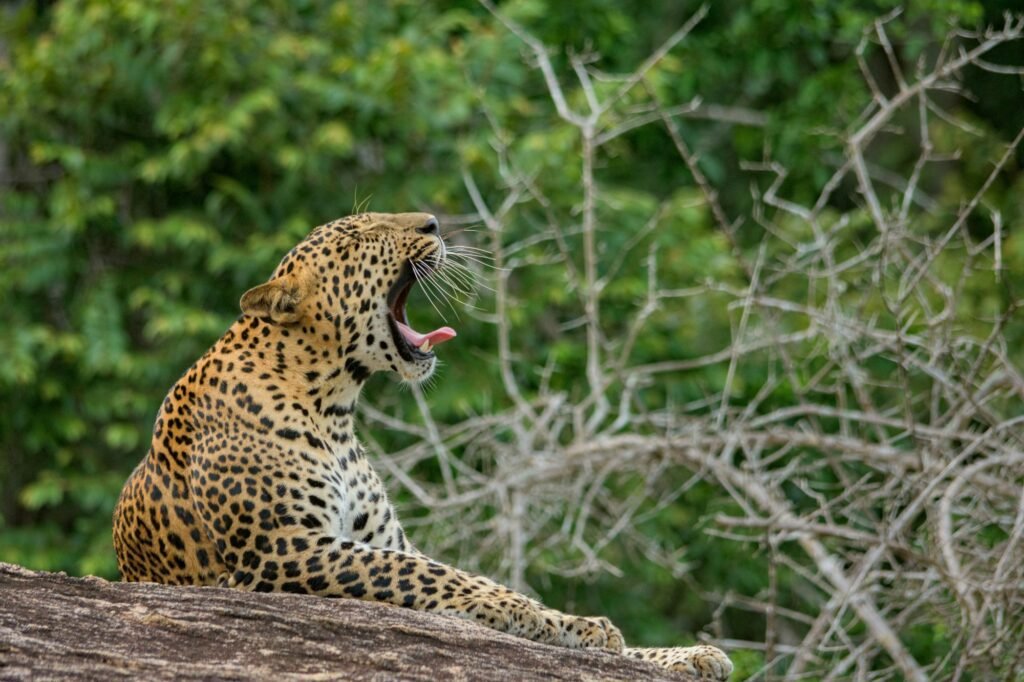
Few countries pack as much biodiversity into such a small area as Sri Lanka. The island hosts leopards, elephants, whales, and hundreds of endemic species you won’t find anywhere else. For wildlife enthusiasts, Sri Lanka delivers world-class experiences without the crowds of African safaris or the expense of Galapagos.
Sri Lanka’s Biodiversity in Brief
Despite being roughly the size of West Virginia, Sri Lanka contains:
- 91 mammal species (including 16 endemics)
- 500+ bird species (33 endemics found nowhere else)
- 245 butterfly species
- 5 of the world’s 7 sea turtle species
- Multiple climate zones from tropical coast to montane forests
The variety comes from the island’s geographic position—a biodiversity hotspot where Indian and Southeast Asian species overlap—combined with varied terrain creating distinct ecosystems.
National parks and protected areas cover about 25% of the country, preserving habitats from rainforests to dry zone scrublands.
Top Wildlife Parks
Yala National Park
Yala’s Block 1 has the world’s highest leopard density. Your chances of spotting these elusive cats are better here than anywhere else on earth. Beyond leopards, the park hosts elephants, sloth bears, crocodiles, and abundant birdlife.
The landscape mixes scrubland, lagoons, and rocky outcrops. Safari jeeps follow tracks through varying terrain, stopping at waterholes where animals congregate.
Best time: February to July for leopard sightings. August-September sees temporary closures for maintenance.
Safari duration: Half-day (3-4 hours), typically early morning or late afternoon.
Udawalawe National Park
If elephants are your priority, Udawalawe delivers. Herds numbering 50+ elephants roam the park’s grasslands and reservoirs. Sightings are virtually guaranteed—the park has an estimated 500-600 elephants.
The open terrain makes viewing easier than forested parks. You’ll often see multiple herds during a single safari.
Nearby, the Elephant Transit Home rehabilitates orphaned baby elephants. Viewing sessions (feeding times at 9 AM, noon, 3 PM, and 6 PM) let you watch the young elephants being cared for before their eventual release.
Best time: Year-round, though dry season (May-September) concentrates animals near water sources.
Minneriya and Kaudulla National Parks
These adjoining parks host “The Gathering”—one of the world’s largest Asian elephant congregations. During dry months (July-September), 200-300 elephants gather around the ancient Minneriya reservoir.
Watching hundreds of elephants—adults, juveniles, babies—interact, bathe, and feed against the backdrop of the tank (reservoir) creates an unforgettable spectacle.
Best time: August-September for peak gathering. Park choice (Minneriya or Kaudulla) depends on water levels—your driver knows which is currently better.
Wilpattu National Park
Sri Lanka’s largest park gets fewer visitors than Yala, meaning you often have sections to yourself. Leopards inhabit the park along with elephants, sloth bears, and deer species.
The park’s defining feature is its “villus” (natural lakes) scattered throughout the forest. Wildlife gathers at these water sources, creating excellent viewing opportunities.
Best time: February to October.
Sinharaja Rainforest
A UNESCO World Heritage Site, Sinharaja protects the last viable area of Sri Lanka’s rainforest. This is where you find endemic species—birds like the Sri Lanka blue magpie and red-faced malkoha, plus purple-faced langur monkeys.
Sinharaja requires hiking rather than jeep safaris. Guided walks through the forest reveal incredible biodiversity. Birdwatchers particularly value this destination.
Best time: January to April and August to September (avoiding heavy monsoons).
Endemic Animals to Spot
These species exist only in Sri Lanka:
Mammals:
- Sri Lankan leopard (larger and more boldly patterned than mainland subspecies)
- Purple-faced langur (monkey species with distinctive purple coloring)
- Toque macaque (monkey with cap-like whorl of hair)
- Sri Lankan sloth bear
- Rusty-spotted cat (one of world’s smallest wild cats, extremely rare)
Birds (33 endemic species including):
- Sri Lanka blue magpie (brilliant blue plumage)
- Sri Lanka junglefowl (national bird)
- Ceylon whistling thrush
- Yellow-fronted barbet
- Layard’s parakeet
Reptiles:
- Various lizard species found only here
- Multiple endemic snake species
Birdwatching Highlights
Sri Lanka attracts serious birdwatchers because of its endemic species concentration and high overall diversity packed into accessible locations.
Key birding sites:
Sinharaja Rainforest: Highest concentration of endemics. Mixed-species flocks move through the canopy, often containing 6-8 endemic species together.
Bundala National Park: Coastal wetlands attract migratory shorebirds (September-March). Flamingos, pelicans, and numerous wader species feed in the lagoons.
Kumana National Park: Known for nesting waterbirds. The park’s lagoons host breeding colonies of egrets, ibises, and storks (May-June peak breeding).
Horton Plains: High-altitude grasslands home to montane species. Early morning walks reveal highland endemics like the dull-blue flycatcher.
Serious birders can realistically see 25+ endemic species in a dedicated 10-day trip.
Best Wildlife Itineraries
8-Day Wildlife Focus
Day 1-2: Wilpattu National Park
- Two game drives for leopard and sloth bear chances
- Explore villus lakes
Day 3-4: Minneriya/Kaudulla
- Witness the elephant gathering
- Visit Sigiriya between safaris
Day 5-6: Yala National Park
- Multiple safaris targeting leopards
- Coastal habitats for different species
Day 7: Bundala National Park
- Wetland birding en route to coast
Day 8: Mirissa whale watching
- Blue whales and dolphins
- Beach relaxation
12-Day Nature and Wildlife Complete
Adds to the above:
- Sinharaja Rainforest (2 days for serious birdwatching)
- Horton Plains and montane species
- Udawalawe for guaranteed elephant sightings
- Turtle hatchery visit on coast
5-Day Quick Wildlife Sampler
For travelers adding wildlife to a cultural tour:
- Minneriya elephant safari from Cultural Triangle base
- Yala safari en route to south coast
- Whale watching from Mirissa
Why Guided Safaris Are Safer and Better
DIY safaris aren’t allowed—all national parks require entering with authorized safari jeeps and drivers.
Tour packages ensure your safari is pre-booked with reputable operators. Walk-up safari bookings often mean:
- No availability (especially peak season)
- Higher prices for last-minute slots
- Less experienced trackers who miss wildlife
- Overcrowded jeeps (6 people versus 4)
Quality safari operators provide:
- Experienced trackers who read animal signs and know behavior patterns
- Well-maintained jeeps with comfortable seating and sun protection
- Proper permits and park access at optimal times
- Knowledge of current animal locations via tracker networks
- Binoculars and field guides for species identification
Safety matters too. Wild elephants, leopards, and sloth bears are dangerous if approached incorrectly. Professional guides maintain appropriate distances and know how animals react to vehicles.
Good guides also enhance the experience by explaining animal behavior, pointing out species you’d overlook, and providing photography tips.
Explore Sri Lanka’s Wildlife with Expert Guides
Sri Lanka offers wildlife experiences that rival East Africa at a fraction of the cost and with far fewer tourists. Royal Step Lanka designs nature-focused tours that maximize wildlife sightings through expert guides, optimal timing, and access to the best parks. Contact us to plan your wildlife adventure.